Start with the honest constraint: this is one shop, not a network
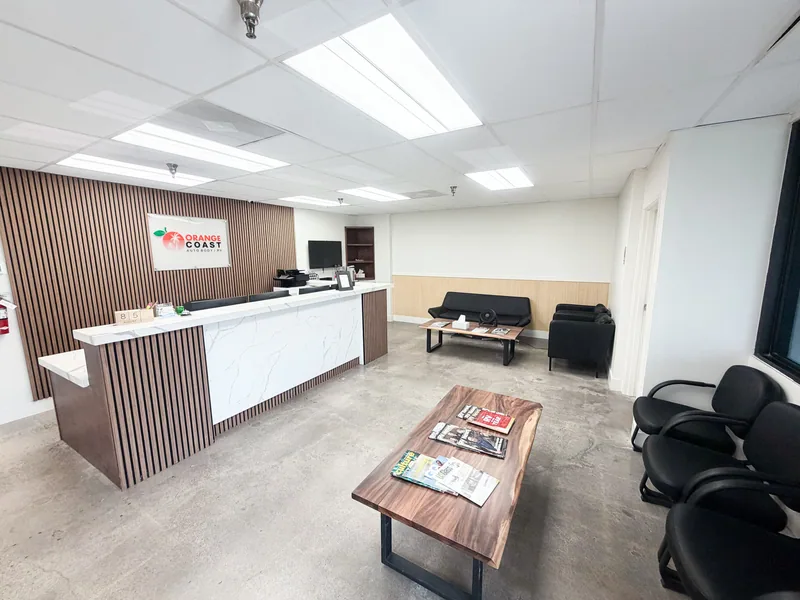
Orange Coast’s Fountain Valley facility is at 10810 Talbert Avenue. Discuss each vehicle’s size, damage and repair requirements with the shop before arranging an inspection or transport.
Keep repair information together. Ask how the shop will provide estimates, updates and final documentation for each vehicle. Agree on the contact and approval process before repairs begin.
Plan around individual assessments. Each vehicle needs its own damage assessment before the repair sequence can be discussed. Share your operational priorities and ask what the shop can accommodate.
Sequencing several vehicles without stopping the business
When more than one vehicle is damaged, the decisions stop being body decisions and become operational ones.
Address safety and drivability first. Appearance alone does not establish whether a damaged vehicle is safe to drive. If safety is uncertain, avoid driving it and call the shop to discuss inspection and transport. Scheduling follows the assessment.
Discuss a repair sequence. Once each vehicle has been assessed, ask whether suitable body and paint work can be scheduled around your operating needs. Timing depends on the damage, parts and shop availability.
Review the scope per vehicle. Share any replacement or disposal plans with the shop. Consider the written repair findings alongside the vehicle’s intended use, and resolve safety concerns before treating damage as cosmetic.
Book around your own calendar. If your quiet fortnight falls in January, the cosmetic batch belongs in January.
Approvals, authority limits and the delay nobody budgets for
A vehicle can sit waiting for a decision as easily as it can sit waiting for a part.
Name an approval contact. Give the shop a contact who can review estimates and additional findings. Confirm how that person will receive updates and provide authorization.
Agree on the approval process. Confirm which work needs written authorization and how additional findings will be presented. Keep your company’s approval requirements clear before repairs begin.
Plan for additional findings. Disassembly can reveal damage hidden behind panels or trim. Ask how changes to parts, labor or procedures will be documented and approved.
Keep records by vehicle. Use a VIN or fleet unit number to connect the estimate, authorizations, repair documentation and invoice. Confirm who should receive the final paperwork.
Claim, or pay for it directly?
Fleets face a claims question private motorists do not.
Ask your insurer what a claim means for your policy. What claiming does to a business policy depends on your carrier, your cover and your history, and a body shop cannot tell you. Put the question to your insurer directly, get the estimate, and then decide with both answers in front of you. It should be a decision, not a default.
Share the claim details. Tell the shop if another party or insurer is involved. Confirm the payer, required paperwork and any unresolved coverage questions with the insurer.
Bring the policy to the inspection. The deductible per vehicle, whether your cover includes replacement transport, and whether it specifies parts types are all in the policy, and none of them are set by the shop.
Keeping a fleet looking like a fleet
Tell the shop about company color and graphics requirements. Paint condition, production differences and prior repairs can affect how individual vehicles compare.
Ask how the proposed refinishing scope addresses the existing paint and any adjacent panels. The appropriate approach depends on the vehicle, damage and paint system.
Explain your appearance requirements. Share brand colors, graphics specifications and any expectations for consistency across the fleet. Review the proposed finish with the shop.
Have artwork available. Lettering or wraps affected by a repair may need replacement. Keep the artwork and installer’s details accessible so the work can be coordinated.
What we repair for business vehicles
- Collision repair on vans, cargo vans and commercial vehicles
- Structural and alignment work — frame and measuring equipment is on site at Talbert Avenue
- Panel, body and paint, including refinishing beneath removed company graphics
- Cargo door, rear door and sliding door repair — fit and operation, not only appearance
- Bumper, valance and lower-panel repair — the accumulated loading-bay and parking-lot damage
- Multi-vehicle planning — sequencing and batching across several vehicles
This page covers business vans and commercial vehicles. Orange Coast also handles smaller RVs and trailers at the Fountain Valley facility. Call with the vehicle’s dimensions and repair needs; large Class A motorhomes are outside this service.
The one credential on this page, and its limits
I-CAR Gold Class
Orange Coast Auto Body’s I-CAR Gold Class certificate names 10810 Talbert Avenue and is valid from January 30, 2026 through April 30, 2027. You can review the certificate with the shop.
The I-CAR recognition shown here applies to the Fountain Valley location. Ask about any vehicle-specific repair requirements when discussing the work.
Working with us on more than one vehicle
1. One call to set the picture. How many vehicles, what kind, what is damaged, how they are used, and whether any of them is still being driven. Name your approver on that call.
2. Inspection. Each vehicle needs its own damage assessment and its own estimate. Ask on the first call how the shop would like several vehicles presented for assessment.
3. A written estimate per vehicle. Ask for it to state what is repaired, what is replaced, and which parts are original-equipment or aftermarket, so you are choosing rather than discovering.
4. An agreed order and agreed dates, built around which vehicles you can afford to lose and when.
5. Approval and parts. Parts availability is a common reason a vehicle waits. Ask about it at the estimate, not on day five.
6. Repair, then paint, then checks. Doors are checked for fit and operation before pickup, because a load door that needs a shove is not a finished repair.
7. Decide who receives the paperwork. On a fleet the person who collects the vehicle is frequently not the person who needs the estimate and the repair record. Settle that on the first call and ask how the shop can get paperwork to them.
Questions fleet and business customers ask
Who should we put forward as the contact?
Name a contact who can review and authorize work, and provide a reliable way for the shop to reach them. Confirm how additional findings will be handled.
Can you look at several of our vehicles?
Each vehicle needs its own assessment and estimate. Call with your vehicle list and operational priorities, then discuss how the shop would like the vehicles presented.
Will our vehicles all match each other?
Paint condition and color can vary between fleet vehicles. Share your color and graphics requirements at the assessment and ask how the proposed refinishing scope addresses them.
Will our company graphics be replaced?
Lettering and wraps affected by the repair may need replacement. Have the artwork and installer’s details ready so replacement work can be discussed.
Why did the estimate go up after you took it apart?
An estimate may change if disassembly reveals additional damage. Ask for the findings and revised scope to be documented, and confirm the approval process before further work proceeds.
Should we claim, or pay for it directly?
Ask your insurer about coverage, deductibles and any effect on your policy. Review that information alongside the repair estimate before deciding how to proceed.
What certifications do you hold?
The Fountain Valley location has I-CAR Gold Class recognition, valid through April 30, 2027. Ask to review the certificate and discuss any additional vehicle-specific requirements.
Can you quote from photographs so we can budget?
Photographs can help explain visible damage before an inspection. They do not establish drivability or reveal every damaged component. Call to discuss the appropriate assessment and transport arrangements.
One of our vehicles cannot be driven.
Call before booking a tow so arrival can be coordinated, and give your transporter the Talbert Avenue address.
Do you do the same for a single work van?
Yes. Everything here applies to one vehicle; it just matters less when there is only one to sequence.